Wednesday, February 10, 2016

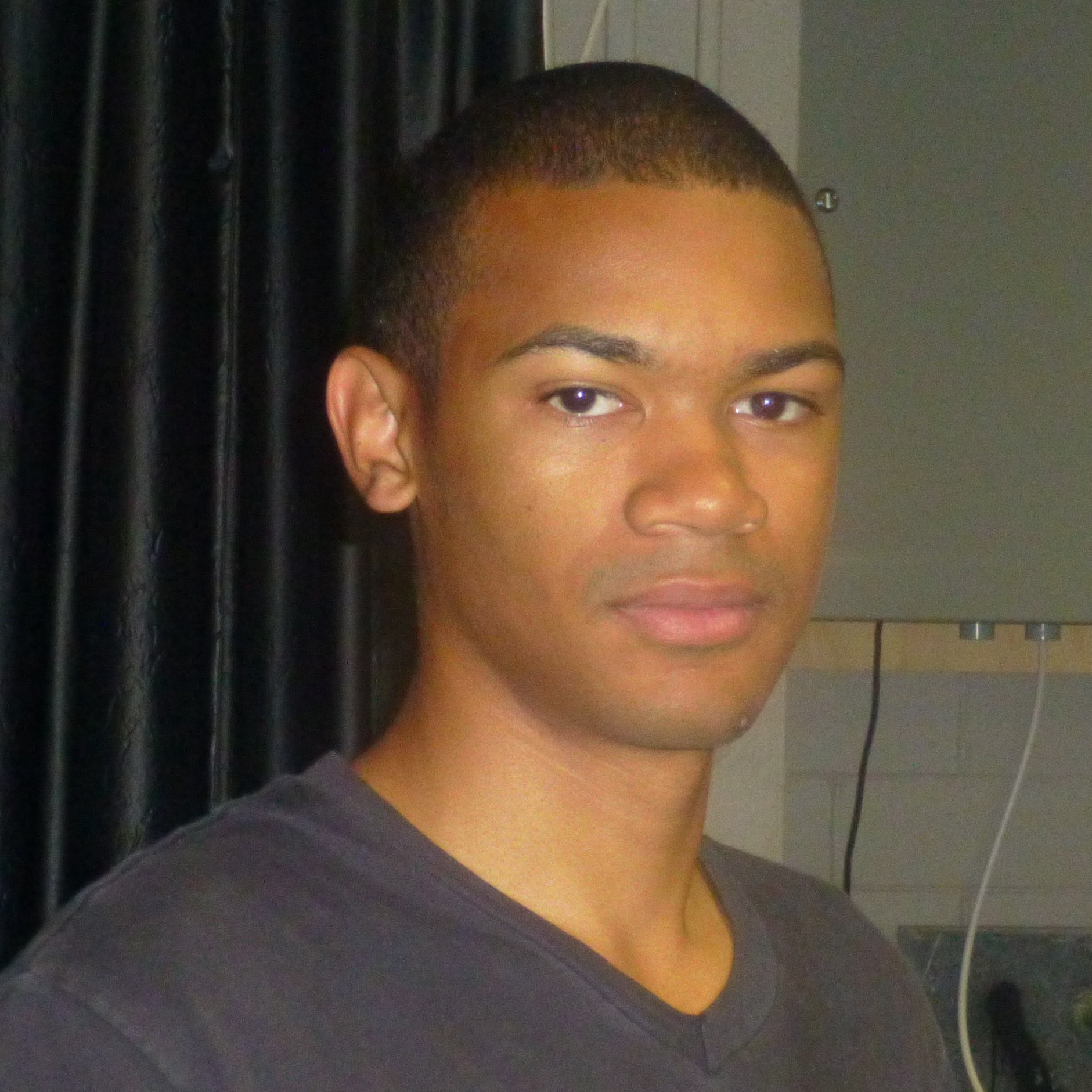
Student highlight: Brianna Thomas

Brianna Thomas (Howard '17)
Recipient of the 2016 Chambliss Award
Biography

Meet Brianna Thomas, recipient of the 2016 Chambliss Student Achievement Award, granted every year by the American Astronomical Society (AAS) to recognize exemplary research by undergraduate and graduate students. Brianna is currently a junior at Howard University. She won this award for her work entitled “Investigating the Orbital Period Valley of Giant Planets in Kepler Data”. She conducted this research last summer as part of the SAO-Harvard REU program, under the supervision of Dr. Jayne Birkby. She was an affiliate of the Harvard Banneker Institute. She is particularly excited to figure out whether there is life on other worlds. After graduation, she plans to get a PhD in astronomy. While her field of choice is currently exoplanets, she intends to try working in other fields of astrophysics before graduation, to get additional experience and a more complete overview of our field. 

This interview is part of a series of posts on the Astronomy In Color blog dedicated to recognizing achievements by outstanding astronomers of color. Feel free to contact Jorge Moreno (jorgemoreno AT cpp.edu) if you know any other person of color in astronomy who has recently won an award or made any other accomplishment.

Moreno: What was your reaction when you first learned that you won the 2016 Chambliss Prize?

Brianna: I was so happy! It felt amazing to have acknowledgement for a project that I’ve worked hard on.

Moreno: Please tell me more about yourself. What’s your story?

Brianna: I grew up in Queens, NY, one of the best places to live as a kid. There was always so much to do! I learned a lot with each passing day, and having such a supportive, loving family in my corner made life that much easier for me. I have lived on the same block, with the same neighbors, and I attended the same, small primary school for 8 years, with the same students. From that, I know first hand what it means when people say that it “takes a village to raise a child”, and it is one of my go-to mottos. Like many other teens, once I arrived at a new high school, I struggled with ways to fit in with other students around me. I realized that I needed a lot more knowledge about my history and myself in order to prosper, so I decided to attend Howard University, a historically black university, for my undergraduate career. It was one of the best decisions that I have made!

Moreno: What inspired you to pursue a career in astronomy?

Brianna: Astronomy keeps me grounded, ironically :). It helps me put my “earthly” problems in perspective, and it reminds me that it is a blessing that I am able to be here to experience everything around me. I can’t think of any other field that would make me happier.

Moreno: In your opinion, what qualities make your work so unique and compelling?

Brianna: One of the coolest skills I learned from high school was how to turn on my creativity whenever I wanted. It was a humanities school, so I found myself having to participate in music, art, theater, and film even when I didn’t feel like it all of the time. What I didn’t realize was how useful this skill would be in scientific research! Understanding all of the basic topics of physics and astronomy for my research only got me but so far. Finding an answer required thinking from different points of view and piecing together various aspects of what I knew to see if a correlation could be made. It also takes a bit of creativity to imagine what I’m working on, so I really like that I’ll be able to keep that side of my thinking active along with my logical side.

Moreno: As a woman of color, what challenges and obstacles have you faced in your career? How have you overcome these challenges?

Brianna: Again, I had a safe bubble to grow up in throughout my childhood. It was safe, not only because it was familiar, but also because everyone in it looked like me and followed my culture. High school was where I first realized that I could be very different. It was exhilarating, at first. By my last year, however, I realized that there were so many negative stereotypes, and rarely any positive opinions, that people had about my race and my culture. Not knowing how to respond, I subconsciously took them to heart. This trampled my belief in my ability to be good enough, especially in academics. It took some time, but I was eventually able to learn how false these stereotypes really were. They were just statements and not a true depiction of myself and what I was capable of.

Moreno: People of color, especially women of color, are severely under-represented in our field. Can you point to 1 or 2 factors (specific programs, mentoring etc.) that helped you succeed? Can you also share 1 or 2 ideas for making astronomy a more equitable and inclusive community? For dismantling racism and sexism in general?

Brianna: I believe that mentorship is what will guide us forward. While we can try to influence the astronomers/physicists who act on their prejudices to do otherwise, it will take a lot of time. Only those who are willing to listen are worth talking to about change. However, we should definitely focus on encouraging underrepresented groups and providing them pathways to success, since we know what we are capable of changing. Excellent examples of this are the National Astronomy Consortium (NAC) and Banneker Institute programs, ones that I am grateful to have been affiliated with. They took the initiative to support youth in underrepresented groups who wanted to pursue astronomy. It was great to have allies, but most importantly, we had each other.

I’m not sure if we can ever dismantle racism and sexism completely. However, I do believe that we can overpower its effects by making sure that there are strong mentorship communities available for underrepresented groups. Therefore, even when the rest of the world is slowly changing, we’ll still be as strong as ever.

Moreno: What advice would you give to other young women of color interested in following your path?

Brianna: Besides studying hard (super important!), find an environment that helps you flourish! If that means attending a university in a buzzing city that’s completely different from your quiet neighborhood, then do that. Or maybe it means that you need to seek out others who can mentor you if the people around you doubt your abilities. This might be random, but think about taking the initiative to email that scientist that you aspire to be—ask if you can do research with them.

I understand how hard it can be to not see other scientists that look like you in the media, and in turn, feel discouraged. I also know what it feels like to have people doubt you. The minute those feelings begin to affect your work or, most importantly, you, it’s time to change your environment. Because, trust me, there are places out there where people want nothing more than to see you succeed. You just need to find them.

Moreno: Any final words?

Brianna: Follow your gut! It’s usually right ;).

*Jorge Moreno is an Assistant Professor at Cal Poly Pomona. He is also a member of the AAS Committee on the Status of Minorities in Astronomy (CSMA).

Tuesday, February 2, 2016

Student highlight: Moiya McTier

Moiya McTier (Harvard '16)
Recipient of the 2016 Chambliss Award 
Biography 

Meet Moiya McTier, recipient of the 2016 Chambliss Student Achievement Award. This award is granted every year by the American Astronomical Society (AAS) to recognize exemplary research by undergraduate and graduate students. Moiya is currently a senior at Harvard University. She won this award for her work on determining exoplanet habitability using orbital eccentricity. She conducted this research last summer, when she was a member of the Harvard Banneker Institute. This work ties directly to her senior thesis, a science fiction novel set on the planet she studied, which she eventually hopes to get published. After graduation, Moiya plans to get her PhD in astrophysics and, if she still has any energy left, a master’s degree in medieval European folklore.

This interview is the first of a series of posts on the Astronomy In Color blog dedicated to recognizing achievements by outstanding astronomers of color. Feel free to contact Jorge Moreno (jorgemoreno AT cpp.edu) if you know any other person of color in astronomy who has recently won an award or made any other accomplishment.
  

MorenoWhat was your reaction when you first learned that you won the 2016 Chambliss Prize?

Moiya: I had almost forgotten that I had entered the contest by the time the winners were announced. So when I got the email, I had to read it a few times before the news really settled in. And then I called my mom and we celebrated together on the phone. 


Moreno: Please tell me more about yourself. What’s your story?

Moiya: This is going to sound fake, but I promise it’s true. I actually grew up with in a log cabin in the middle of the woods in Pennsylvania without running water. We didn’t have TV and I was an only child, so I spent a lot of time cracking small codes and cyphers that my mom would create. I wanted to be a cryptographer pretty much all the way up to my sophomore year of college, when I took my first astronomy class. 


MorenoWhat inspired you to pursue a career in astronomy?

Moiya: My finding astronomy was a total fluke. I needed a fourth class one semester and one of my friends asked if I wanted to try out a class on extra-galactic astronomy with her. She ended up not taking the class, but I kind of fell in love with the topic. From there, I took the typical route: internships, term-time research, grad school applications. And there were definitely times when I thought it would be less painful to give up and go back to my hometown to become a coal miner, but I had friends and advisors at each step to remind me how much I loved astronomy and how good I was at it. 


MorenoIn your opinion, what qualities makes you so unique and compelling?

Moiya: I absolutely refuse to confine myself to a single defining box. As a result of that, I’m actually studying both astronomy and mythology in school. That means I have years of experience in tackling problems using an interdisciplinary approach. In order to be successful, you have to be able to adapt to new situations and think of new solutions to old problems. My work is unique because I approach it in a way that most people aren’t willing to. 


MorenoAs a woman of color, what challenges and obstacles have you faced in your career? How have you overcome these challenges?

Moiya: Growing up, I was one of maybe five black people in a part of Pennsylvania where it’s not uncommon to hear racial slurs being thrown around, so I’m no stranger to overt racism. But in my time at Harvard, I’ve learned that systemic – or subtle – racism, and not its overt counterpart, is what really stands in my way. People sometimes ask why it took me so long to believe that I could become a scientist. Well, I don’t know how I could have been expected to realize it sooner when I had never seen anyone who looks like me doing anything like what I’m doing now.  

I’ve overcome that obstacle by repeatedly telling myself that if I succeed, maybe I can be the reason a young woman of color decides to pursue a STEM career in 20 years. 


MorenoPeople of color, especially women of color, are severely under-represented in our field. What ideas do you have for making astronomy a more equitable and inclusive community? For dismantling racism and sexism in general?

Moiya: I do genuinely believe that we can fix this problem that exists in our community, but I think it will take two things: education and time. I think it needs to become standard in astronomy departments everywhere to hold mandatory seminars and workshops about the different kinds of inequalities that exist in our communities. We can’t expect people to help us fix the problem if they don’t know it exists. Once that happens, I think we just need time to let changes happen. 

MorenoWhat advice would you give to other young women of color interested in following your path?

Moiya: I know it’s difficult, but please, please, please try not to compare yourself to your peers. In my experience, nothing has been more damaging to my emotional or mental wellbeing than basing my self-worth on the accomplishments of those around me. Just the fact that you’re even thinking about pursuing this type of career means you’re already cooler than words can express.


MorenoAny final words?

Moiya: Just that I really hope my winning this prize shows people that anyone can succeed in astronomy. And I can’t wait to see the changes that happen in the field in the coming years! 


*Jorge Moreno is an Assistant Professor at Cal Poly Pomona. He is also a member of the AAS Committee on the Status of Minorities in Astronomy (CSMA).


Saturday, January 2, 2016

Students and Postdocs of Color presenting at AAS

Here is a (non-exhaustive) list of students/postdocs of color (URM) who will be presenting at the AAS meeting. Many of the undergrads were students in the Harvard Banneker Institute, NAC and various bridge programs. 
Rising seniors who are applying to grad school are marked with a "*"
Please be sure to stop by these scientists' posters and talks and hear about their exceptional research. If you plan on recruiting them to your institution, know that competition will be fierce!

---Tuesday---

105.02. A Light Curve probe of Stellar Surface Convection and Measure of Stellar Surface Gravity
Fabienne A. Bastien (Hubble Fellow)

110.04. On the Discovery of Massive ZZ Ceti Variables and the Peculiar Light Curve of SDSS J1529 
Brandon Curd *

125.01. The Effects of Magnetic Field Morphology on the Determination of Oxygen and Iron Abundances in the Solar Photosphere. 
Christopher S. Moore (grad student)

121.01. Measuring the Ultraviolet Variability of M Dwarfs with GALEX 
Brittany Miles​ *

135.14 Star formation rates of spiral galaxies in the Cosmic Web, Tuesday posters 
Mehmet Alpaslan (NASA Postdoc)

137.10. A CubeSat to Search for Transiting Planets Around the Young Star Beta Pictoris
Ameer Blake

137.15. Calibrating Images from the MINERVA Cameras 
Ana M. Colón

137.16. High Precision Photometry of Bright Transiting Exoplanet Hosts 
Maurice Wilson​ *

125.06. Resolving Volcanism on Io with Aperture Mask Interferometry 
Chima McGruder

138.08. Lithium Abundance in Planet Search Stars 
Justin Myles​

138.17. A Habitability Test of the Exoplanetary System K2-3 
Ryan Diaz-Perez *

138.18. Home Sweet Home?: Determining Habitability From the Eccentricities of Kepler-186 
Moiya McTier​ *

138.19. Investigating the Orbital Period Valley of Giant Planets in Kepler Data 
Brianna P. Thomas

138.20. Are there exoplanets near their Roche limits? 
Timothy Sanders *

138.21. Introducing an unknown companion in the Kepler-56 system 
Oderah "Justin" Otor *

142.09. Stellar & Planetary Parameters for K2's M dwarf Systems 
Arturo O. Martinez *

142.19. TRENDS: Compendium of Benchmark Objects 
Erica J. Eileen Gonzales (grad)

143.04. Discovering Massive Runaway Stars with Infrared Bow Shock Nebulae: First Results
Julian E. Andrews *

144.01. On The Origin of The Elements: The Spectacular Role of White Dwarfs 
Carl Fields *

145.15. Magnetic Activity of Ultracool Dwarfs 
Myles McKay *

--- Wednesday ---

219.03. Three LINERs Under the Hubble Spectral Microscope 
Mallory Molina

234.03. The Conditions Underpinning Extreme Star Formation in ULIRGs and LIRGs as Revealed by Herschel Far-Infrared Spectroscopy. 
Gabriel Vasquez

236.03 Component Properties of T Tauri Star Binaries (Wednesday)
Ryan Muzzio 

236.05 The DF Tau T Tauri Binary 
Nuria M. Wright-Garba *

236.13. Probabilistic HR Diagrams: A New Infrared and X-ray Chronometer for Very Young, Massive Stellar Clusters and Associations
Jessica Maldonado *

238.09. The Dual Associations of Fermi Source 3FGL J2015.6+3709
Qiana Hunt *

241.08. High-Cadence Timing Observations of an Exoplanet-Pulsar System, PSR B1257+12 - 
Rudy Rivera

241.18. A Particular Appetie: Cosmological Hydrodynamic Simulations of Preferential Accretion in the Supermassive Black Holes of Milky Way Size Galaxies
Natalie Sanchez

249.07. Applying the Principles of Systems Engineering and Project Management to Optimize Scientific Research 
Adria J. Peterkin

318.06D: Using diffusion k-means for simple stellar population modeling of low S/N quasar host galaxy spectra 
Gregory Mosby (applying for postdocs)

--- Thursday ---

318.02. A Continuum Framework of the Long-Term Optical/Near-Infrared Color Variability of Blazars 
Jedidah Isler (NSF Postdoctoral Fellow)

323.04. Highest redshift neutral hydrogen image in emission: A CHILES detection of a star bursting spiral
Ximena Fernández

334.03. Identifying Extraplanar Diffuse Ionized Gas in a Sample of MaNGA Galaxies
Ryan J. Hubbard

339.03. Time-Resolved Spectral Analysis of Blazar 0716+714
Rosamaria Diaz

340.04. Radio and X-ray observations of the Ultra-long GRB 150518A 
Louis Johnson *

342.06. Constraining the Satellite Quenching Timescale at z < 1.5
M. Katy Rodriguez Wimberly *

341.06. Widespread Hot Ammonia in the Central Kiloparsec of the Milky Way 
Tierra Candelaria

341.11. The Milky Way, The Galactic Center Poster Session 
Junellie Gonzalez Quiles

341.14. Probing Metallicity across the Milky Way Disk with the VLA 
Jonathan Barnes

342.11. Interaction Induced Size Evolution in Galaxies
Francisco Javier Mercado 

342.19 H-alpha observations of MKW 10
Harold Johnson

342.26. CSS Object Found in Galaxy Merger 1015+364 at 2.3 and 8.5 Hz 
Antonio J. Porras *

343.11 Millimeter Resolved Observations of the HD 181327 Debris Disk (Thursday)
Amy Steele (Graduate Student,UMD)

343.12. Analyzing the Distribution and Chemical Evolution of Major Nitrogen Carriers within Protoplanetary Disks 
Jamila Pegues *

345.04. WTF- and A- Stars: Spectroscopic Analysis of Kepler Light Curves
Miona G. Short

346.09. Star Formation Rate in The Solar Neighborhood and Beyond 
Bridget Kayitesi

346.15. The Spatial Distribution of Large and Small Dust Grains in Transitional Disks
Elizabeth Gutierrez

347.20. Discovery and Characterization of Large-Angular Size Ionized Nebulae with WHAM
Peter Doze *

348.20. Supernova Photometric Lightcurve Classification
Tayeb Zaidi

349.19. The Arecibo Galaxy Environment Survey: Observations towards the NGC 7817/7798 Galaxy Pair 
Amanda Harrison

--- Friday ---

406.04. The Effect of Orbital Configuration on the Possible Climates and Habitability of Kepler-62f
Aomawa Shields (NSF Postdoc)

424.01. The Dense Gas Fraction in Molecular Clouds 
Nia Imara (Harvard FFL Postdoctoral Fellow)

425.02D. At the interface of the disk and halo: A lesson from APOGEE and other large spectroscopic surveys 
Keith Hawkins (applying for postdocs)

430.05. Kepler AutoRegressive Planet Search 
Gabriel A. Caceres

446.04. AstroPAL: A Mentoring Program for Grad Students
Nicole Estefania Cabrera Salazar (finishing PhD)

Tuesday, December 8, 2015

AAS Beth Brown Award winner presentations and CSMA Meet and Greet

Several current and former Beth Brown Memorial Award winners will be presenting their research at the AAS in Kissimmee, FL in Jan.  The Beth Brown Memorial Award is sponsored by the AAS and presented by the ASTRO committee of the National Society of Black Physicists (NSBP) to two student posters and one student speaker at the NSBP meeting. The prize is named for Dr. Beth Brown an astronomer and active member of both societies, who died suddenly in 2008 at the age of 39.

2015 Oral presentation winner:
Christopher S. Moore (Univ. of Colorado, Boulder)
Abstract ID: 125.01
Title: The Effects of Magnetic Field Morphology on the Determination of Oxygen and Iron Abundances in the Solar Photosphere
Session Title: The Sun and Solar System
Session Date: January 5, 2016

2015 Undergrad poster winner:
Carl E. Fields, Jr. (Arizona State Univ.)
Poster Number: 144.01
Title: On The Origin of The Elements: The Spectacular Role of White Dwarfs
Session Title: Variable Stars & White Dwarfs Poster Session
Session Date: January 5, 2016

Former winners:
Keith Hawkins (Institute of Astronomy, University of Cambridge UK)
Abstract ID: 425.02D
Title: At the interface of the Galactic disk and halo: A lesson from APOGEE and other large spectroscopic surveys 
Session Title: The Milky Way, Stellar Populations
Session Date: January 8, 2016
  
Gregory Mosby (University of Wisconsin, Madison)
Abstract ID: 318.06D 
Title: Using diffusion k-means for simple stellar population modeling of low S/N quasar host galaxy spectra 
Session Title: AGN, QSO, Blazars: Physics and Models 
Session Date: January 7, 2016 

------
CSMA Meet and Greet Scheduled for 6:30 PM - 7:30 PM; St. George 104 (Gaylord Palms Resort and Convention Center)


Tuesday, October 6, 2015

Visualizing privilege


But also, there's this, based on this study. Here's the abstract:
Racial inequity continues to plague America, yet many Whites still doubt the existence of racial advantages, limiting progress and cooperation. What happens when people are faced with evidence that their group benefits from privilege? We suggest such evidence will be threatening and that people will claim hardships to manage this threat. These claims of hardship allow individuals to deny that they personally benefit from privilege, while still accepting that group-level inequity exists. Experiments 1a and 1b show that Whites exposed to evidence of racial privilege claim to have suffered more personal life hardships than those not exposed to evidence of privilege. Experiment 2 shows that self-affirmation reverses the effect of exposure to evidence of privilege on hardship claims, implicating the motivated nature of hardship claims. Further, affirmed participants acknowledge more personal privilege, which is associated with increased support for inequity-reducing policies.